
Cambria County Arrest Records and Charges
An arrest record can point to who was taken into custody, the agency involved, and the booking or jail side of the event. Cambria County did not publish a complete official online jail roster in the county prison research, so current county custody is best confirmed through the prison or custody notification channels. Once charges are filed in court, the charge record moves into UJS docket access, Magisterial District Court records, and adult criminal Court of Common Pleas records kept by the Clerk of Courts.
The court charge record is the better source for charge names, statute sections, grading, OTN, complaint number, preliminary hearing events, charge disposition, and later sentence entries. For custody or jail-service details, the Cambria County inmate records page is the better match. For the full case file after charges are filed, use Cambria County criminal court records.
That split matters because Cambria County research did not find a county-operated public booking database that gives full arrest records online. A person may have to call Cambria County Prison for current custody, use Pennsylvania VINE for custody notification if listed, or check CRIMEWATCH for public agency posts. The charge record, by contrast, is read through the court docket once the allegation is filed with an MDJ or the Court of Common Pleas.
Find Cambria Arrest Records and Charges
The main court channel for charges after arrest is UJS Case Search. A user can search by docket number, participant name, organization name, OTN, police incident or complaint number, and state ID number when those fields are available. Select Cambria County or the right court type to narrow results. Magisterial District Court records are important for preliminary arraignments, preliminary hearings, traffic citations, non-traffic summary offenses, and private criminal complaints after district attorney approval.
- Search UJS by OTN, docket number, complaint number, police incident number, or defendant name.
- Open the result that matches Cambria County, the defendant, and the court listed on the papers.
- Review each charge row for statute section, grading, status, and disposition.
- Read docket entries for preliminary hearing, arraignment, bail, continuance, plea, dismissal, or sentencing activity.
- Contact the Clerk of Courts for adult Common Pleas criminal copies or the issuing MDJ for lower-court copies.
The CRIMEWATCH Cambria County network can also show official local agency posts for arrests, wanted persons, and warrants, but it is not a full county court-charge index.
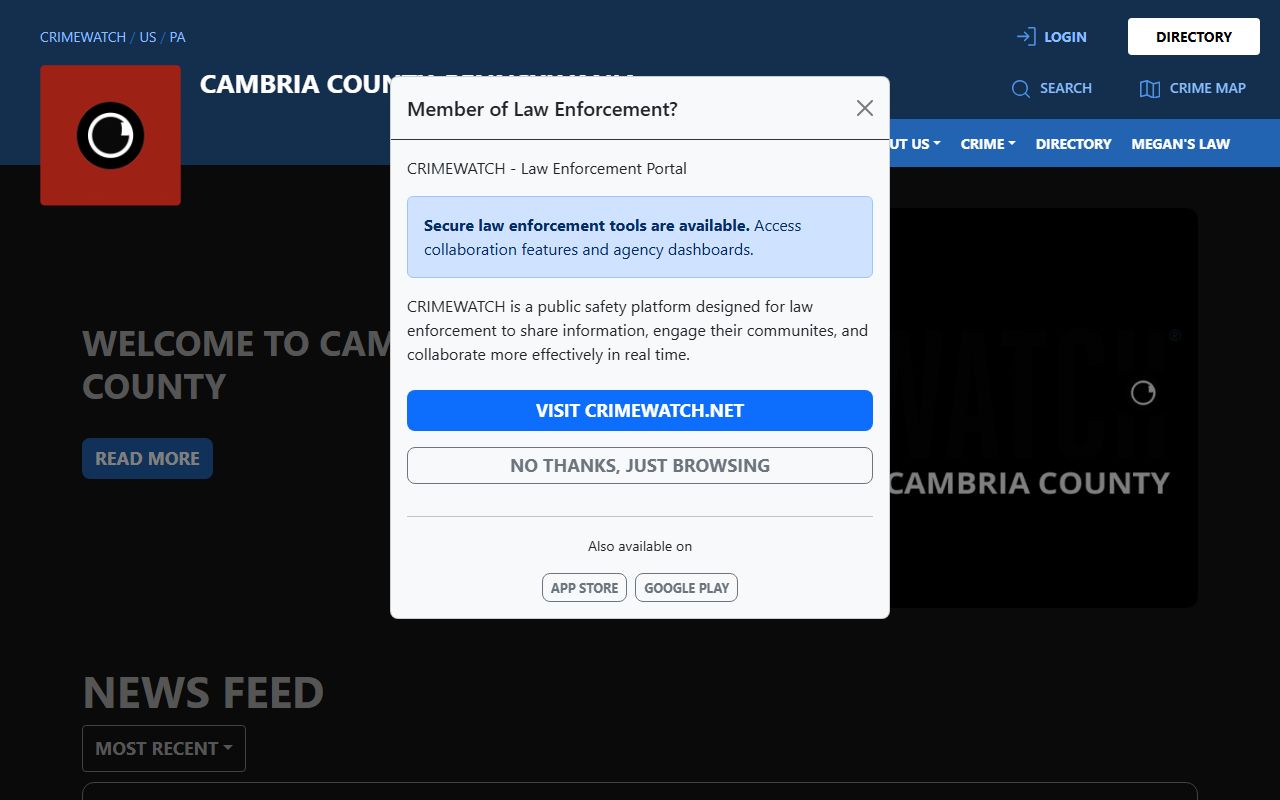
CRIMEWATCH posts can give law-enforcement context, while UJS and the court office remain the better sources for the official charge status.
A useful search set includes last name, first name, date of birth, docket number, OTN, complaint number, citation number, and police incident number. UJS help notes that minimum search criteria can help when a case is hard to find, but broad name searches may show many people with similar names. If the case is very recent, the filing office may have the newest information before the online docket refreshes.
Charges After Arrest
In Pennsylvania court records, a complaint may begin a criminal or summary case, and an information is the prosecutor's formal Common Pleas charging document. The District Attorney's Office in Cambria County lists arraignment, continuance, private complaint, Veterans Court, and criminal justice flow resources. The office is at the Cambria County Courthouse, 200 South Center Street, Ebensburg, and the listed phone number is (814) 472-1680. Private criminal complaints use statewide public forms and usually require prosecutor review before the matter proceeds.
Cambria County Magisterial District Courts are often the first public court point for charges after arrest. They handle preliminary arraignments, preliminary hearings, traffic citations, non-traffic summary offenses, private criminal complaints after district attorney approval, and local ordinance matters where applicable. If a docket shows the matter bound over or transferred, the Common Pleas criminal case file becomes the better place to read later pleas, motions, sentencing, and appeal entries.
| Document | Who Uses It | What It Means in Cambria County |
|---|---|---|
| Complaint | Police, private complainant after approval, or lower-court process | Can begin a criminal, traffic, summary, or preliminary matter in a Magisterial District Court. |
| Information | District Attorney | Formal Common Pleas charging paper that follows prosecutor review when charges move forward. |
| Citation | Officer or issuing agency | Common for traffic and many summary offenses, with payment or contest options through the court. |
The Cambria County Adult Probation page identifies specialty court and supervision resources linked to some criminal outcomes.
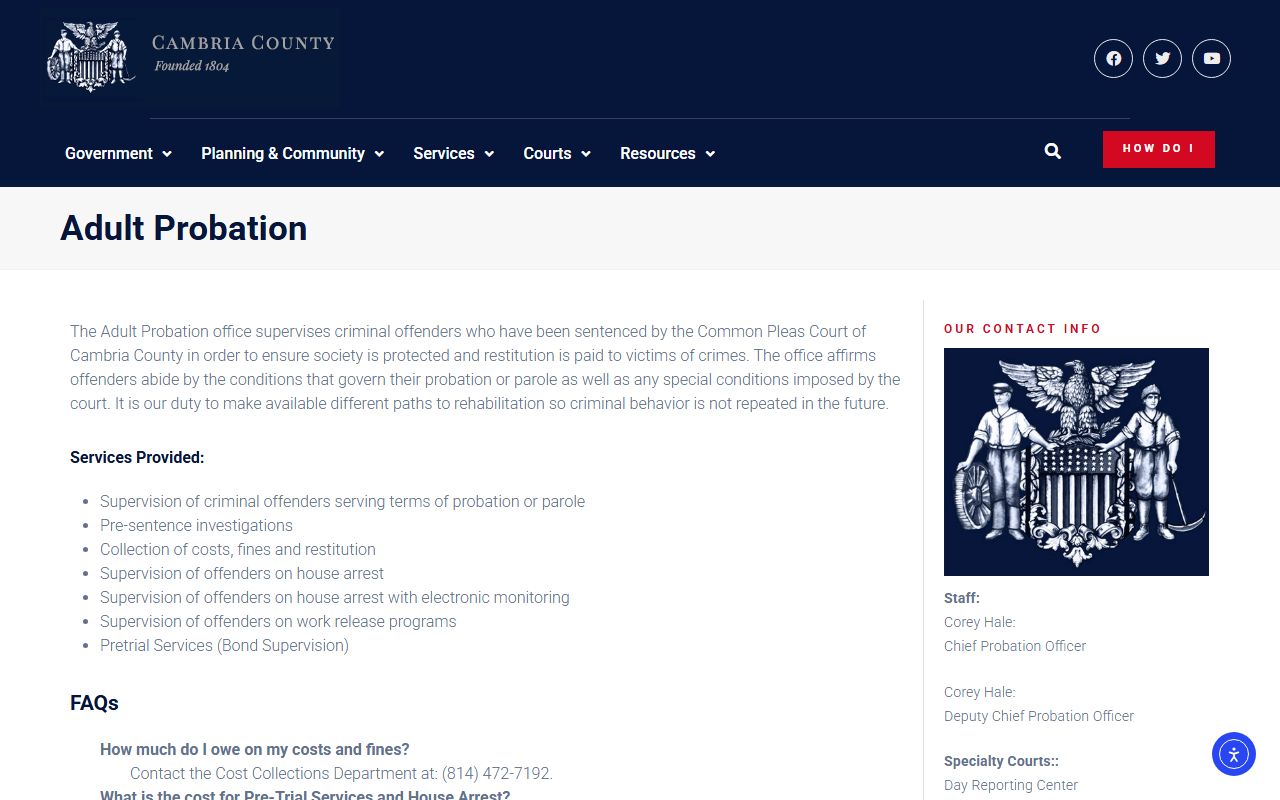
Probation information is outcome-related, so it helps explain later docket entries rather than the first arrest event.
Cambria County Charge Status
Charge status can change as a case moves through Magisterial District Court and the Court of Common Pleas. A charge may be pending at first, amended after review, reduced in a plea, dismissed at a hearing, or marked nolle prosequi if the prosecutor declines to proceed. One arrest can produce several charge rows, and each count may end in a different way. Always read the disposition column and the later docket entries together.
| Status | Plain Meaning | How to Read It |
|---|---|---|
| Pending | The charge has not reached a final outcome. | Check for the next hearing date, bail entry, or motion. |
| Amended or reduced | The original charge changed. | Compare early charge rows with later docket and disposition entries. |
| Dismissed | The charge did not proceed in that form. | See whether it was dismissed with or without prejudice if the record says so. |
| Nolle prosequi | The prosecutor declined to proceed. | Do not count that charge as a conviction without a separate guilty disposition. |
| Guilty plea or verdict | The charge resulted in a guilty outcome. | Look for the sentencing, costs, restitution, or probation entries. |
Court Charges vs Convictions
A court charge is an accusation. A conviction is a final guilty outcome. Cambria County arrest records can lead to charge rows, but those rows do not all mean conviction. A public docket may show dismissed charges, withdrawn counts, reduced counts, and charges that ended in a plea. This distinction matters for employment, licensing, housing, and personal record review because a charge-only result can read very differently from a sentence entry.
| Question | Charge | Conviction |
|---|---|---|
| What is it? | An allegation filed in court after arrest or citation. | A guilty plea, guilty verdict, or other final guilty finding. |
| Where is it found? | Complaint, information, citation, charge list, or docket row. | Disposition and sentence entries. |
| Can one case have many? | Yes. One arrest can produce several charges. | Yes. Some counts may convict while others are dismissed. |
Public Access and Limits
UJS public docket sheets are the main online path for public charge data, but Pennsylvania's public access rules still limit what appears online. Secure docket sheets contain more information and require login. Juvenile matters, adoption records, sealed criminal records, expunged records, confidential victim or witness information, Social Security numbers, financial account numbers, and some minor-related data may be restricted or redacted.
The Pennsylvania Right-to-Know Law can help with county administrative records, but judiciary case access follows the courts' public access policies. The Criminal History Record Information Act controls criminal-history information beyond a simple docket lookup. For a court charge correction, a person should identify the docket number, OTN, charge, disposition, and the agency or court that holds the record before asking the proper office to review it.
Some charge data is public only as a docket summary. Secure docket sheets can include additional criminal Common Pleas and Magisterial District information that is not shown to the public without login. A sealed, expunged, or limited-access charge may disappear from public view even though a court or law-enforcement agency can still confirm restricted information to a person or agency with authority.
The juvenile expungement statute, 18 Pa.C.S. § 9123, is one of the state laws tied to restricted juvenile records.
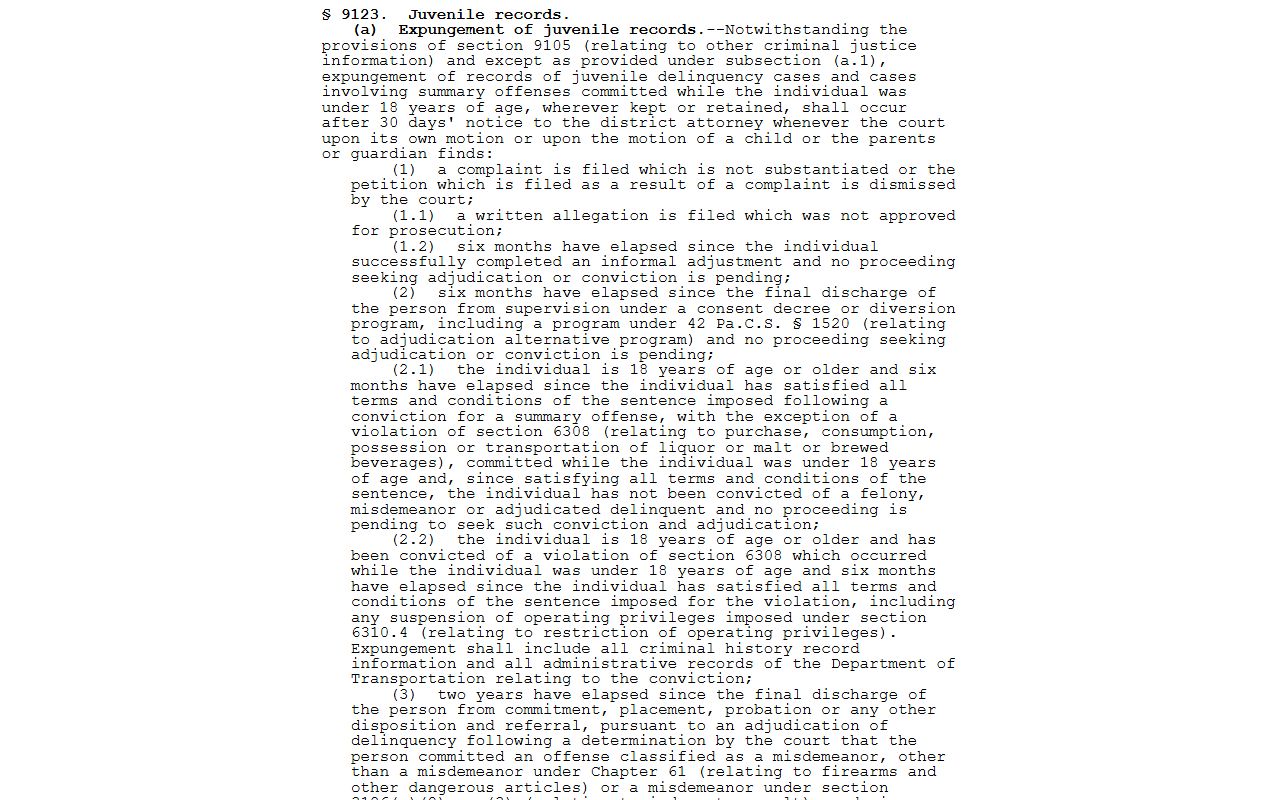
That law is relevant because juvenile charge records are not treated like ordinary adult public dockets.
Charge Record Fallbacks
If a Cambria County court charge does not appear online, use the court level that handled the event. For Common Pleas adult criminal records, contact the Clerk of Courts. For preliminary hearings, traffic citations, summary offenses, or lower-court failure-to-appear issues, contact the listed Magisterial District Court. For jail custody, contact Cambria County Prison or check Pennsylvania VINE when a person is listed. For agency posts, check CRIMEWATCH with the understanding that it is selective.
The county Open Records Officer is a fallback for non-case county records, sheriff administrative records, or records not held by the judiciary. Research identifies Melissa Kestermont as the Open Records Officer at 200 South Center Street, Ebensburg, with phone (814) 472-1607, fax (814) 472-6940, and email mkestermont@co.cambria.pa.us. That route should not be used to bypass court access rules for criminal case files.
- Clerk of Courts: adult criminal Common Pleas case files and certified copies.
- Magisterial District Court: preliminary, traffic, summary, and lower-court docket issues.
- District Attorney: charging review, private complaint resources, and prosecutor-filed papers.
- County Prison: present county custody questions where no public roster was found.
- UJS Portal: statewide public docket sheets and PAeDocket mobile searches.
Note: A missing online result does not prove no charge exists, especially when the filing is recent or the case is restricted.