
Cambria County Criminal Court Records
Adult criminal Court of Common Pleas files in Cambria County are kept by the Cambria County Clerk of Courts. The office states that it maintains adult criminal records and protects the security and integrity of those records. Its public office is at 200 South Center Street in Ebensburg, and the listed phone number is (814) 472-1540. The Clerk of Courts is the right local office when a public online docket does not answer the question, when a certified criminal copy is needed, or when an older court file must be checked through the courthouse record system.
Criminal cases in Cambria County can start in a Magisterial District Court for preliminary arraignment, preliminary hearing, summary matters, or traffic and non-traffic citations. Felony and misdemeanor cases that move forward are handled by the Court of Common Pleas, Judicial District 47. Court Administration lists criminal court phone support at (814) 472-1560, while the statewide judiciary publishes public docket sheets for criminal Common Pleas and Magisterial District Court cases through the Unified Judicial System.
The Clerk of Courts page is one of the official sources for Cambria County criminal court records.
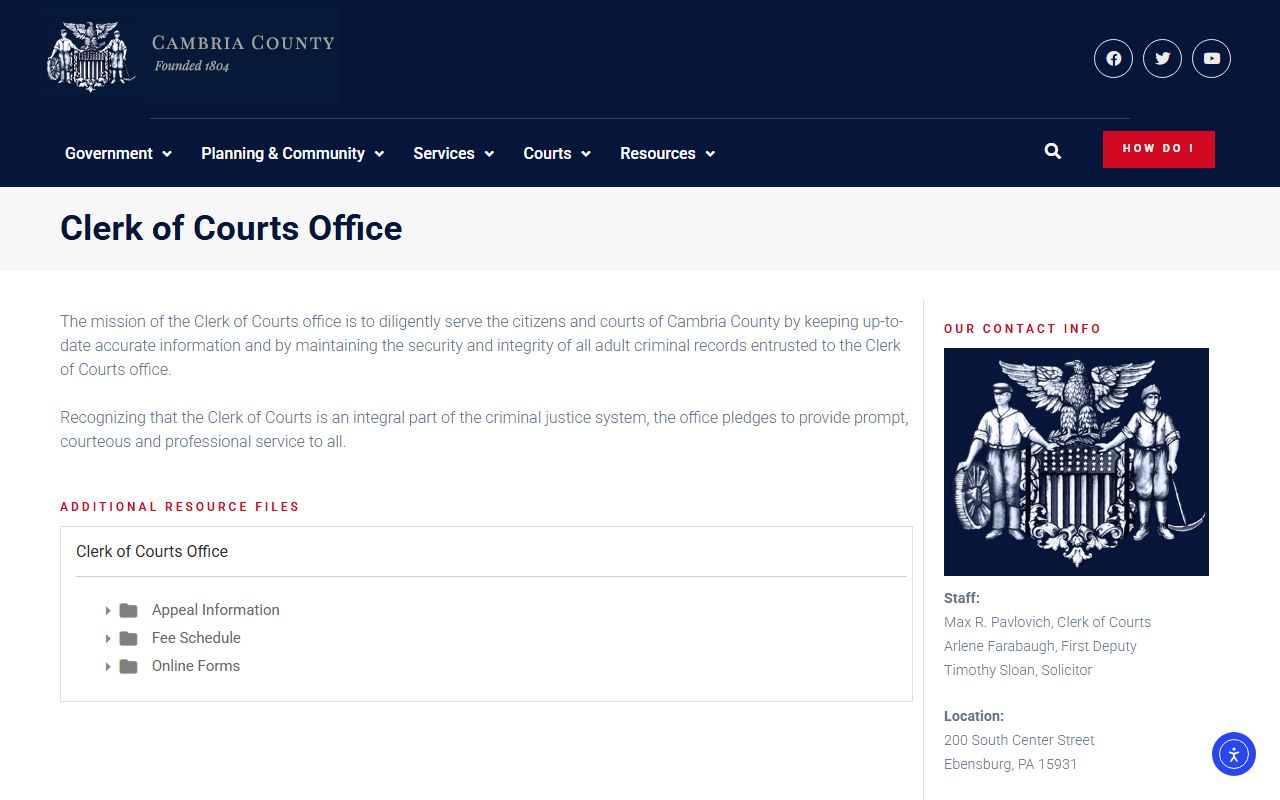
That office source matters because public docket sheets are summaries; certified copies and case-file questions still route to the criminal clerk.
Search Cambria County Criminal Records
The main online channel for Cambria County criminal court records is UJS Case Search. The Pennsylvania courts describe public web docket sheets as available for Criminal Courts of Common Pleas, Magisterial District Courts, appellate courts, and Philadelphia Municipal Court. For a Cambria County search, use the statewide portal first, narrow the county when the search fields allow it, and compare the docket number, defendant name, date of birth, OTN, complaint number, or police incident number with the papers already in hand.
- Open UJS Case Search and choose a search path such as docket number, participant name, OTN, complaint number, or police incident number.
- Limit the search to Cambria County when that filter is offered, then select the court type that fits the case.
- Open the matching docket sheet and review the caption, status, court, judge or MDJ, and charge rows.
- Read the docket entries in date order to see filings, hearings, continuances, bail activity, pleas, dispositions, and sentencing entries.
- Contact the Cambria County Clerk of Courts for certified copies, appeal papers, or records that do not appear online.
UJS warns that recent filing-office entries may not appear right away. It also warns that docket sheets are not the same as a Pennsylvania State Police criminal-history background check. PAeDocket, the state court mobile app, can search public magisterial, Common Pleas, and appellate case information by docket number, participant name, organization name, OTN, complaint number, or state ID number.
When a Cambria County criminal court record is missing from the public search, use the docket clues to pick the next office. Adult criminal Common Pleas records route to the Clerk of Courts. Preliminary matters, summary offenses, private criminal complaints after district attorney approval, and many traffic-linked criminal entries route through the Magisterial District Court that handled the case. Administrative records that are not court case files may use the county Open Records Officer instead of the criminal clerk.
Cambria County Criminal Case Flow
A Cambria County criminal case record is built in stages. Early entries may come from a Magisterial District Court, especially for an arraignment, bail action, preliminary hearing, or summary offense. If charges proceed to the Court of Common Pleas, the Clerk of Courts record can include the formal information, arraignment, pretrial motions, continuances, pleas, trial events, verdicts, sentencing, restitution, costs, probation orders, and appeal entries.
Case flow: Charges Filed › Arraignment › Pretrial or Motions › Plea or Trial › Disposition › Sentencing
| Stage | What the Record Can Show |
|---|---|
| Charges Filed | Complaint, information, offense tracking number, statute section, grade, and the agency or prosecutor action. |
| Arraignment | Proceeding where charges are read and plea, bail, counsel, or scheduling issues may be addressed. |
| Pretrial or Motions | Continuances, motions, orders, hearing dates, and case-management entries. |
| Plea or Trial | Guilty plea, trial event, verdict, dismissed count, or prosecutor decision not to proceed. |
| Sentencing | Sentence terms, costs, restitution, probation orders, and appeal or post-sentence activity when public. |
The Cambria County District Attorney publishes criminal-flow and arraignment resources that help explain why a court record may show several steps before a final outcome.
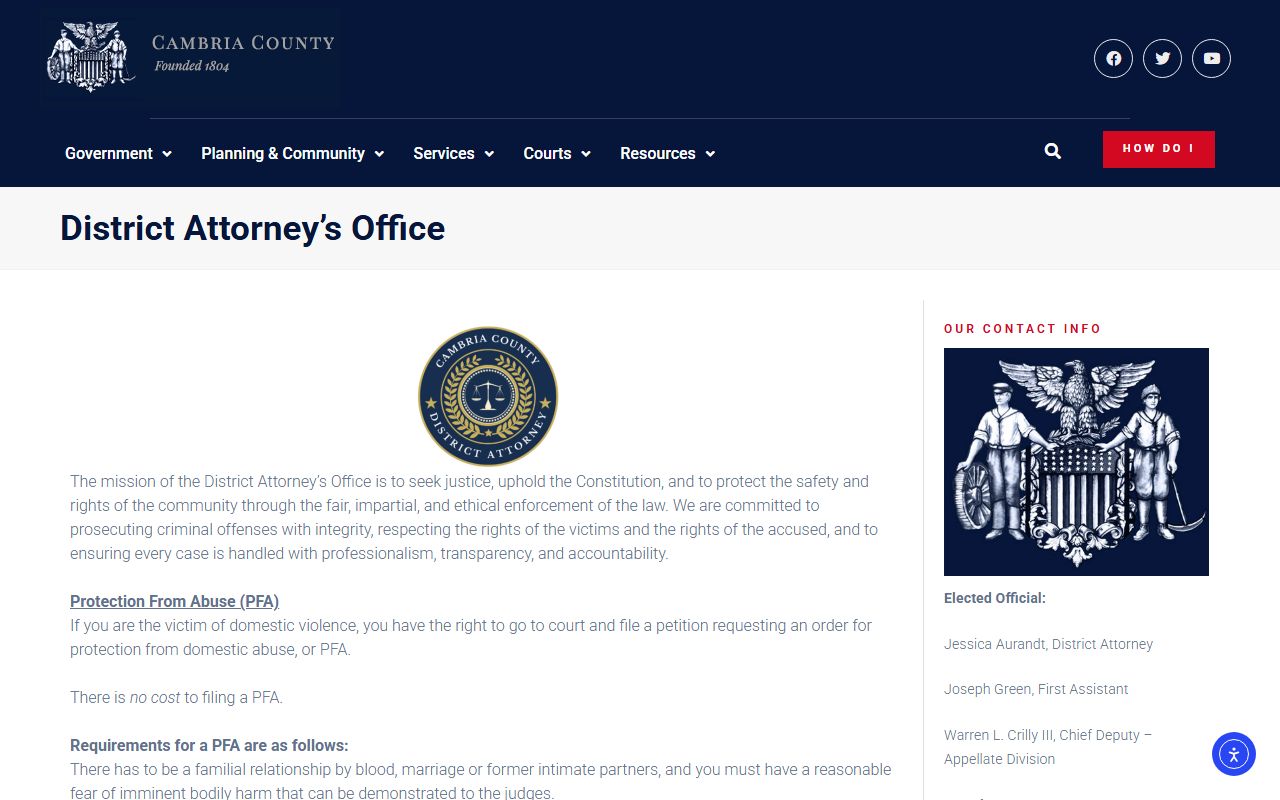
Those prosecutor resources are useful context, but the filed court record itself is still checked through UJS and the Clerk of Courts.
What Criminal Records Show
A public Cambria County criminal court record can contain both case-level data and charge-level data. The docket number identifies the case. The OTN links the criminal justice process. Charge rows identify the statute, offense, grading, and current disposition. Docket entries then show how the case moved through the court. A full case file may also contain papers that are not displayed in the public web summary, which is why certified copies and file review still depend on the Clerk of Courts.
| Field | What It Shows |
|---|---|
| Docket number | The court case identifier used for UJS searches, copy requests, and appeal tracking. |
| Court and county | Whether the record is in Cambria County Common Pleas or a Magisterial District Court. |
| Defendant and counsel | Public party names and attorney information where the policy permits display. |
| OTN or complaint number | Offense tracking or complaint data tied to the criminal filing. |
| Charges | Offense names, statute sections, grading, and charge disposition rows. |
| Docket entries | Chronological filings, hearings, orders, continuances, bail entries, pleas, and sentencing activity. |
| Financial obligations | Costs, restitution, bail, or payment-plan data when public and tied to the case. |
The Cambria County Public Defender page identifies the county offices that handle eligible defense representation in criminal matters.
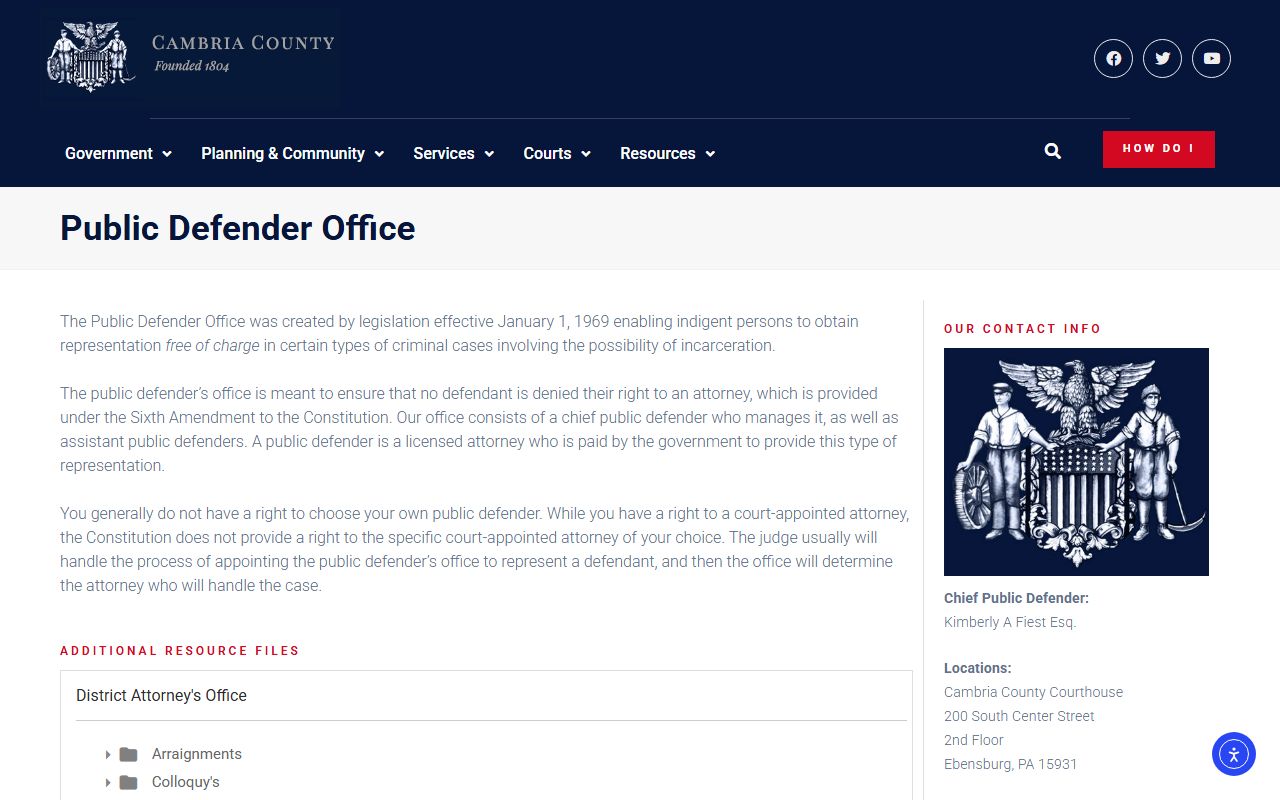
Defense counsel information may appear in docket data, but eligibility and representation questions go to the Public Defender or a private attorney.
Cambria Criminal Charges vs Convictions
Charges are accusations filed in court. Convictions are outcomes after a guilty plea, verdict, or other final finding. A Cambria County criminal court record may show charges that were dismissed, withdrawn, amended, reduced, or ended by nolle prosequi, which means the prosecutor declined to proceed on that charge. Because the public docket can list each count separately, do not treat every charge row as a conviction.
| Issue | Charge | Conviction |
|---|---|---|
| Meaning | An allegation filed in the criminal case. | A final guilty outcome by plea, verdict, or qualifying court finding. |
| Where it appears | Charge list, complaint, information, or docket sheet. | Disposition, sentence, and final docket entries. |
| Can it change? | Yes. Charges can be amended, reduced, dismissed, or withdrawn. | Changes usually require appeal, post-sentence relief, expungement, or limited-access relief. |
For more detail on the charge list itself and court charges after arrest, use the Cambria County arrest records and charges page.
Public Access to Criminal Records
Pennsylvania court access is not controlled by one county clerk rule. Public docket sheets are provided through the Unified Judicial System, while courthouse copies depend on the filing office that keeps the record. The Pennsylvania courts public records page points to judiciary access policies, financial record access, docket sheets, and correction request information. Cambria County administrative records, such as non-case county records, can also route through the county Right-to-Know process.
Key rules: 65 P.S. § 67.101 et seq. governs state and local agency records, but court case access follows judiciary rules and policies.
Pa.R.J.A. 509 treats Unified Judicial System financial records as open for inspection and copying unless an exception applies.
The UJS Electronic Case Record Public Access Policy controls what criminal case data appears in public electronic docket access.
The Pennsylvania Criminal History Record Information Act is one of the laws tied to criminal-history record data.
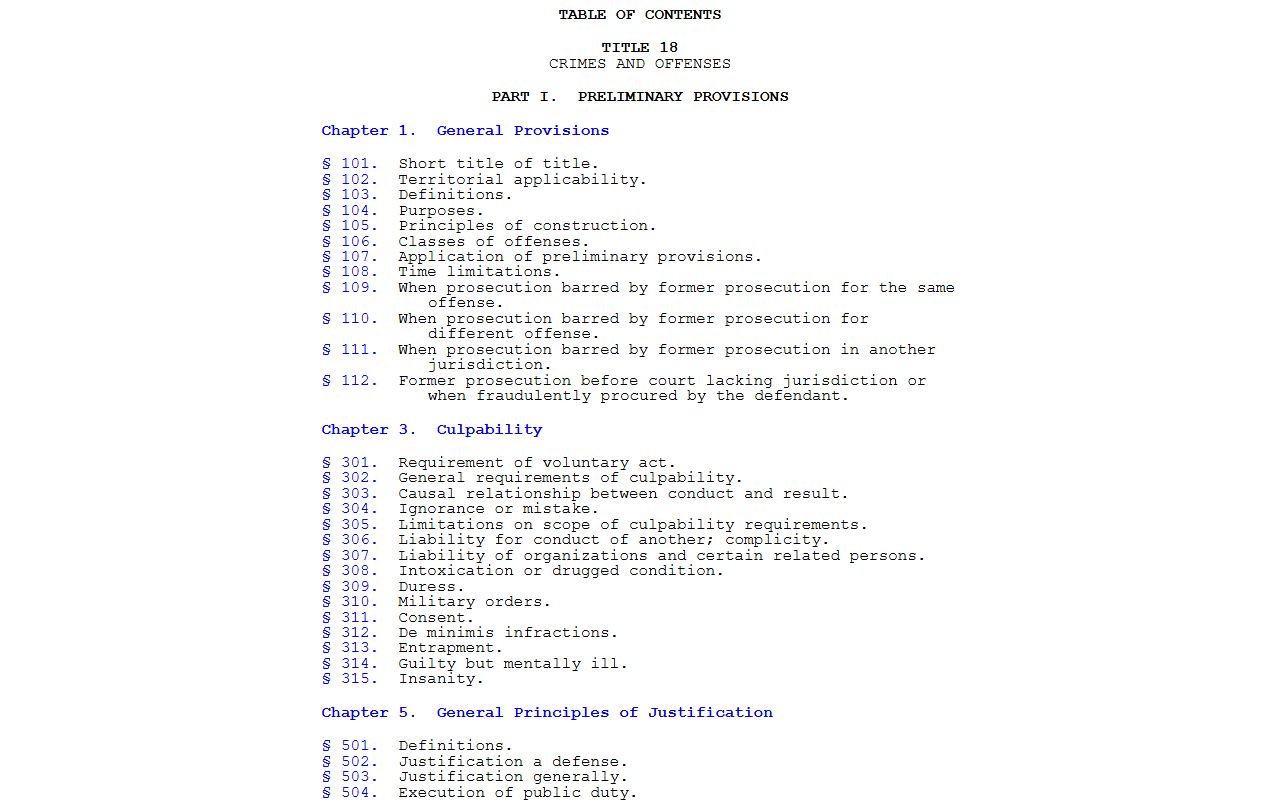
That statute is separate from the public docket sheet, so background-check and correction questions may require a different official channel than a court lookup.
Restricted Cambria Criminal Records
Not every criminal case detail is public online. Restricted categories can include juvenile cases, sealed criminal records, expunged records, mental-health matters, confidential victim or witness data, Social Security numbers, financial account numbers, minor names in certain contexts, and secure criminal reports. UJS also distinguishes public docket sheets from secure docket sheets. Secure reports can include criminal accounting or pre-sentence data that is not part of the public web docket.
| Issue | Limited Access or Sealed | Expunged |
|---|---|---|
| Public view | Hidden or limited from public access, depending on the order and policy. | Removed or restricted as directed by an expungement order. |
| Common record basis | Eligible criminal records, sealed matters, or protected data. | Specific qualifying adult or juvenile circumstances under Pennsylvania law. |
| Practical step | Confirm docket status with the Clerk of Courts or counsel. | Identify the docket, OTN, charges, arrest date, disposition, and agencies before filing. |
The state expungement law, 18 Pa.C.S. § 9122, addresses specific adult criminal-history expungement circumstances.
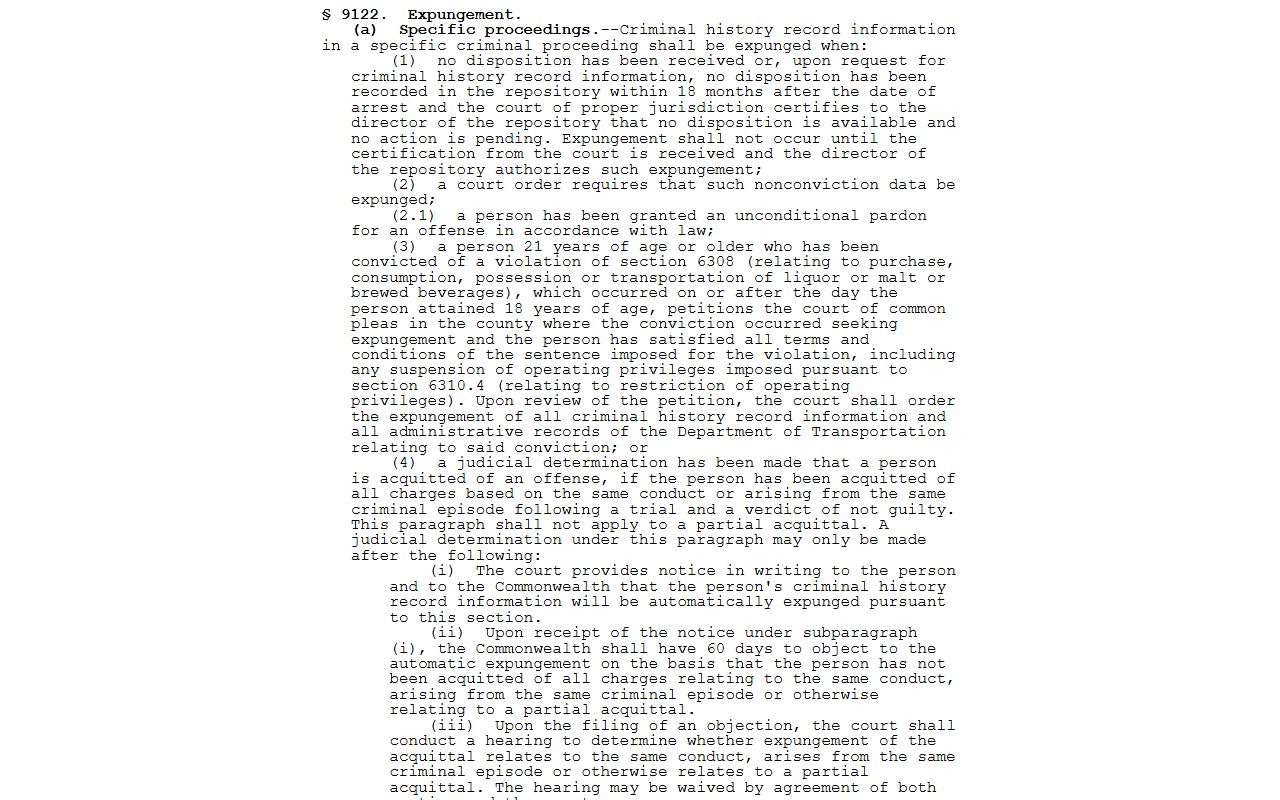
Eligibility should be checked against the statute, the docket, and legal advice because a public lookup cannot decide whether relief applies.
For expungement or limited-access review, the research identifies the practical record set: docket number, OTN, charges, arrest date, disposition, and agencies holding the record. After a judge signs an order, the listed agencies must remove or restrict the record according to that order. That process is separate from simply asking a search site to hide a result.
Note: Online criminal court records can lag recent courthouse entries, so verify urgent case status with the Clerk of Courts or issuing court.